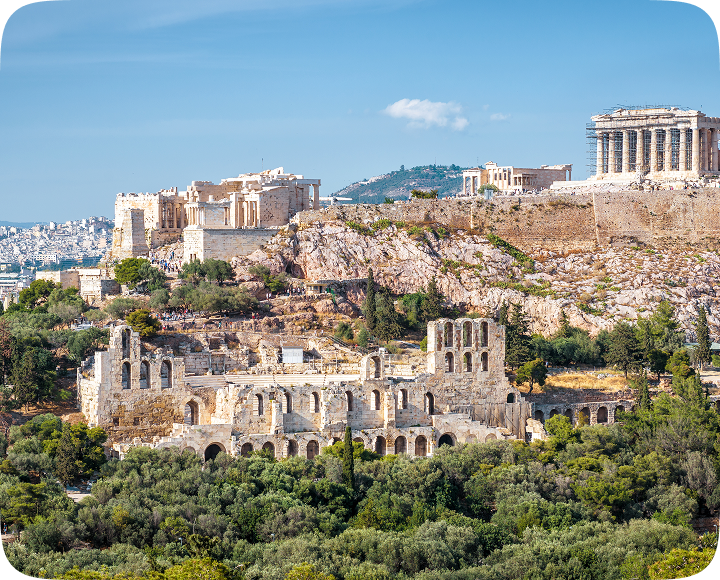



For many international property owners, Greece represents a rare combination: a European market with strong lifestyle appeal, growing tourism, improving infrastructure, and property prices that — in many areas — still feel accessible compared with other major Mediterranean destinations. Athens, in particular, has become one of the most closely watched real estate markets in Europe, attracting investors who are looking for both lifestyle opportunities and long-term asset growth.
The appeal of Greece is not based on one single factor. It comes from a combination of economic recovery, international demand, tourism growth, urban regeneration, and the increasing popularity of Athens as a destination for residents, digital workers, students, and visitors. For foreign investors, the city offers something that many mature European markets no longer provide: the possibility of entering a major European capital at a relatively competitive price point while benefiting from a market that is still developing.
Unlike some established European cities where property prices have reached levels that make entry difficult, Athens continues to attract attention because it combines affordability with strong fundamentals. Investors are not only looking at current rental income but also at the possibility of long-term appreciation as neighborhoods improve, infrastructure expands, and Greece continues to strengthen its position as an international destination.
Greece’s Real Estate Recovery and Market Potential
Part of this interest comes from Greece’s broader economic recovery. After the sovereign debt crisis of the 2010s, the country went through years of fiscal adjustment, banking pressure, falling property values, and limited investor confidence. But the market has changed significantly since then. According to the Bank of Greece, apartment prices in Athens increased by 5.2% year-on-year in Q1 2026, while prices across Greece rose by 5.7% overall in the same period. In 2025, Athens apartment prices rose by 6.5% on average.
This growth reflects a wider transformation in the Greek property market. Areas that were previously overlooked have experienced renovation, new businesses, improved infrastructure, and increased demand from both local and international buyers. Neighborhoods close to transport links, universities, cultural areas, and business centers have become particularly attractive.
The recovery has also changed the profile of many Athens neighborhoods. Districts that once had limited international attention are now seeing new cafés, restaurants, coworking spaces, renovated apartment buildings, and improved public areas. This urban transformation creates opportunities, but it also requires investors to look beyond simple price comparisons.
However, rising prices do not mean that every property is automatically a strong investment. The Athens market remains highly fragmented. A renovated apartment near a metro station, hospital, university, or tourist area may perform very differently from a similar-sized apartment in a building with poor maintenance, outdated infrastructure, or limited accessibility.
Successful investors usually focus less on buying “in Athens” and more on understanding the exact location, building quality, tenant profile, realistic income potential, and future development of the surrounding area.
Factors such as floor level, natural light, elevator availability, energy efficiency, renovation quality, and proximity to transportation can significantly influence both rental demand and resale value. Two apartments located only a few streets apart can have completely different investment outcomes.
Tourism, Regulation, and the Reality of Remote Ownership
Tourism remains one of the strongest engines supporting the market. Greece continued to record strong travel income, with Bank of Greece data showing travel receipts rising sharply in late 2025 and early 2026. In December 2025 alone, travel receipts reached €623 million, up from €468.6 million in December 2024.
This tourism strength supports demand for accommodation, hospitality services, employment, and urban renewal — all of which indirectly influence property values and rental opportunities. Athens has benefited from becoming more than a short stop before visiting the islands. It is increasingly viewed as a destination in its own right, attracting visitors who stay longer and explore the city beyond traditional tourist areas.
At the same time, the Greek market is becoming more regulated and more professional. Short-term rental rules have tightened, tax reporting is increasingly digital, and property owners are expected to comply with multiple systems: AADE, ENFIA, lease declarations, municipal charges, utility contracts, and, in some cases, safety or registration requirements.
For investors living abroad, the opportunity is still very real — but the difference between a successful investment and a stressful one often lies in execution. A property in Athens is not only an asset on paper. It is a living operation: bills arrive, tenants change, repairs appear, tax deadlines pass, and regulations evolve.
Remote ownership requires a different mindset. Buying the property is only the beginning. The ongoing success of the investment depends on maintenance, communication, compliance, and the ability to respond quickly when unexpected situations occur.
The investors who usually enjoy the Greek market most are those who combine confidence in Greece’s long-term potential with careful local management. The right property can create value, but only when supported by reliable systems and people on the ground.